
For physios, PTs, and coaches
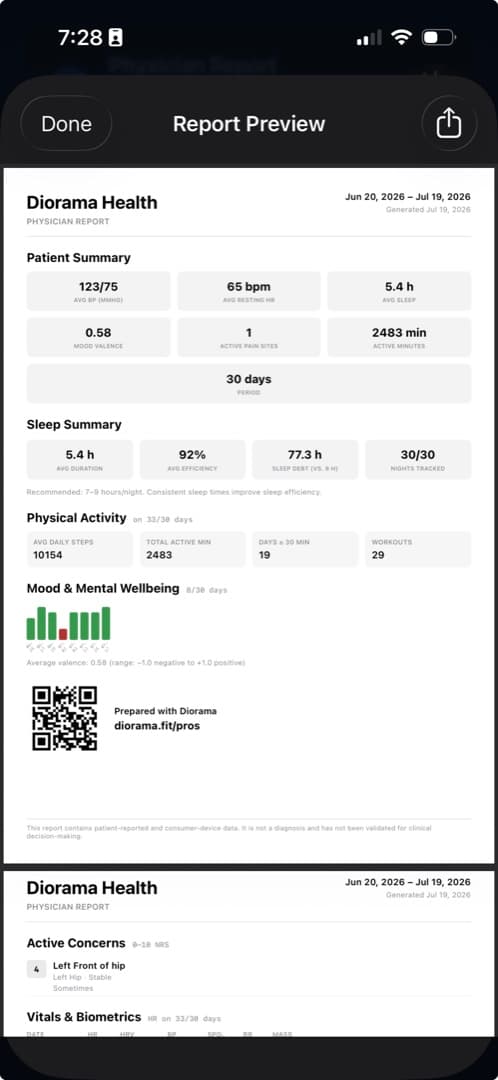
When an athlete brings a Diorama report, this is what you are seeing.
Diorama helps active adults package training, recovery, pain, adherence, and context into a readable PDF before a care or coaching conversation.
Resources
See the report, then hand it forward.
Both downloads use fictional information. Use them to see how a report can frame a care conversation. They are not clinical assessments.
Patient-controlled sharing
A report exists only when the athlete chooses to generate and share it. Diorama is not a clinic portal.
Local-first by design
Core tracking data stays on the athlete's device by default. Reports are generated on-device and exported by the athlete.
Conversation aid, not diagnosis
Reports summarize self-reported tracking and device sensor data so appointments can start with better context.
How reports are created
The athlete controls the export.
Diorama reports cut down on appointment archaeology: fewer scattered screenshots, more useful context in one place.
The athlete tracks their week
Diorama assembles training, recovery, pain, soreness, habits, and relevant health context from the devices and logs the athlete already uses.
They choose a report type
Physio, physician, and coach reports organize the same underlying context for different conversations.
They export a PDF
The report is generated on the athlete's device. They decide whether to print it, send it ahead, or bring it to an appointment.