
Steps = movement.
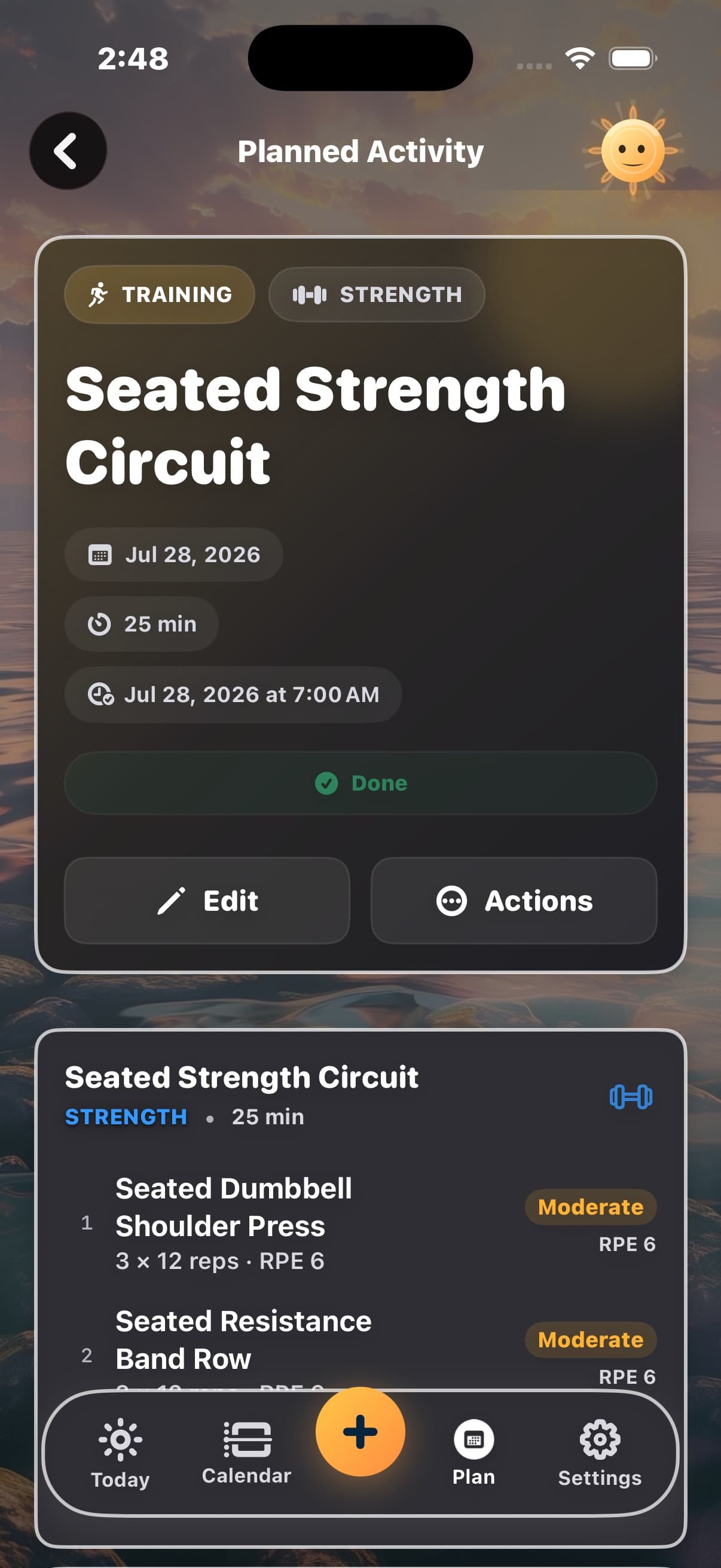
A wheelchair-racing interval, pool workout, or seated strength session can end with almost no steps.
For more ways to move
Whether you race in a chair, train in a pool, rebuild strength, or fit movement around daily life, Diorama carries the details you choose into tracking and coaching.
Review, edit, or remove what Diorama remembers.
The quiet assumption
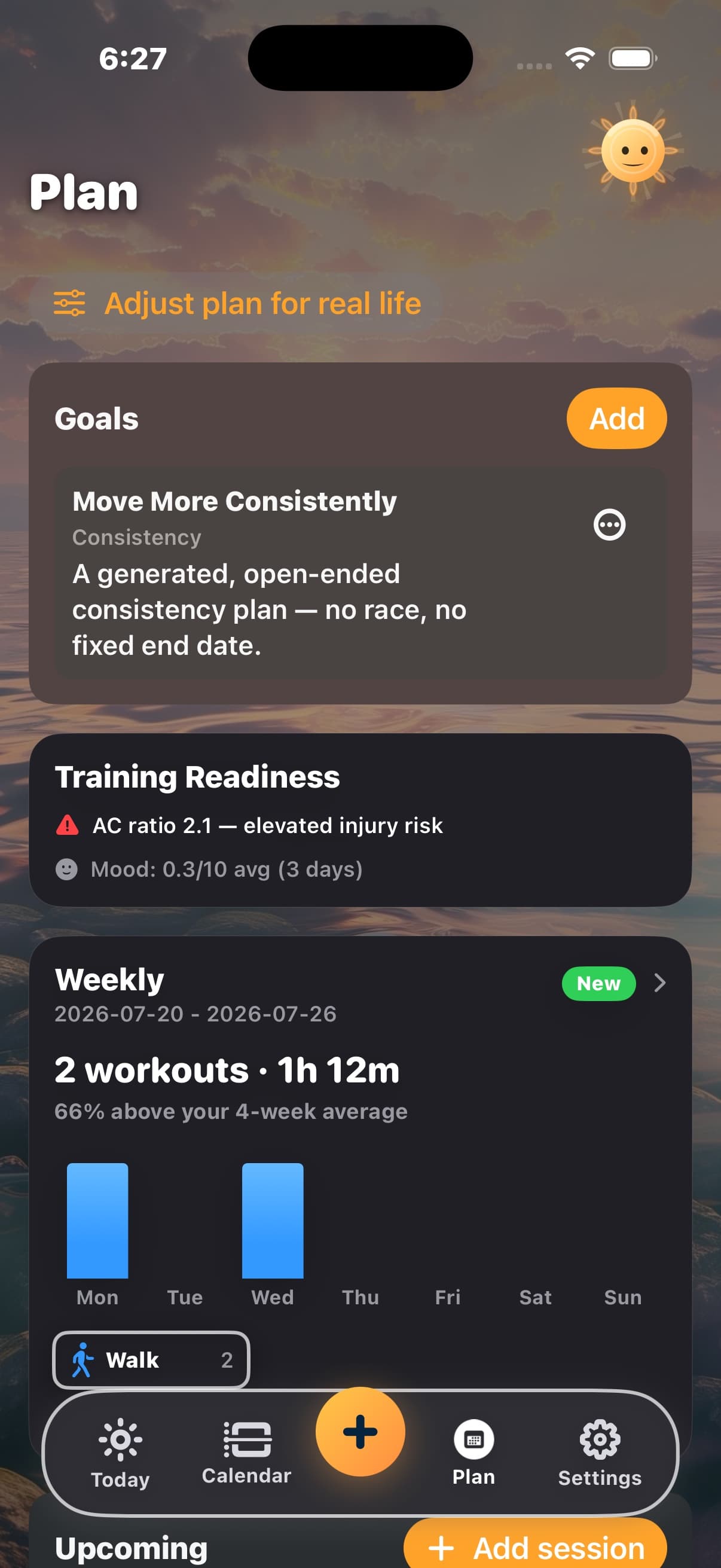
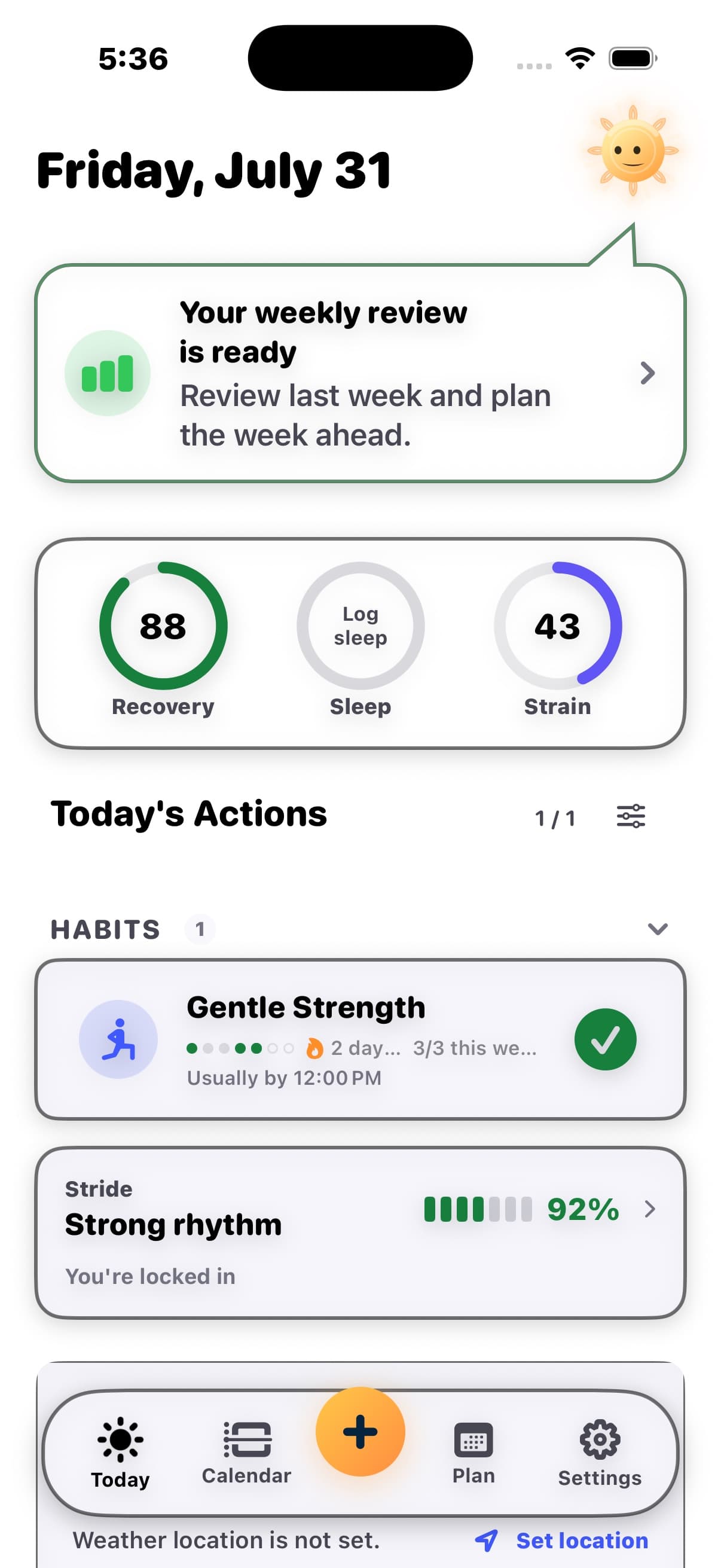
Steps do not describe every kind of movement, and heart rate does not describe every kind of effort. A wheelchair-racing interval or seated strength session can be demanding even when the step count is low. A person working on mobility may care more about consistency and completion than pace. Diorama keeps the activity’s real identity, uses the movement metrics that apply, and carries the context you provide into future coaching.
A wheelchair-racing interval, pool workout, or seated strength session can end with almost no steps.
A sport, disability, or individual response can make a demanding workout look easy to an app.
Training to compete, supporting mobility, and rebuilding strength deserve more than “Other.”
A hard session should not disappear because the app watched the wrong metric.
How it works
Tell Ray something that matters about how your fitness works, such as “I’m a wheelchair racer,” “I need seated strength options,” or “I only have resistance bands at home.” Diorama saves it to your profile. That detail can shape your daily movement view, workout analysis, weekly review, readiness, and future coaching replies. Your workouts keep their real Apple Health type and icon, while movement can be measured in pushes, wheelchair distance, active minutes, duration, or other applicable metrics. You can review, edit, or remove everything Diorama remembers about you at any time.
Tell Ray “I’m a wheelchair racer,” “I need seated strength options,” or “I only have resistance bands at home.” No long intake required.
The details stay on your device and remain yours to review, edit, or remove.
Daily movement, workout analysis, readiness, weekly review, and coaching can use what you shared.
What changes
Instead of
Your activity flattened to “Other”
Diorama
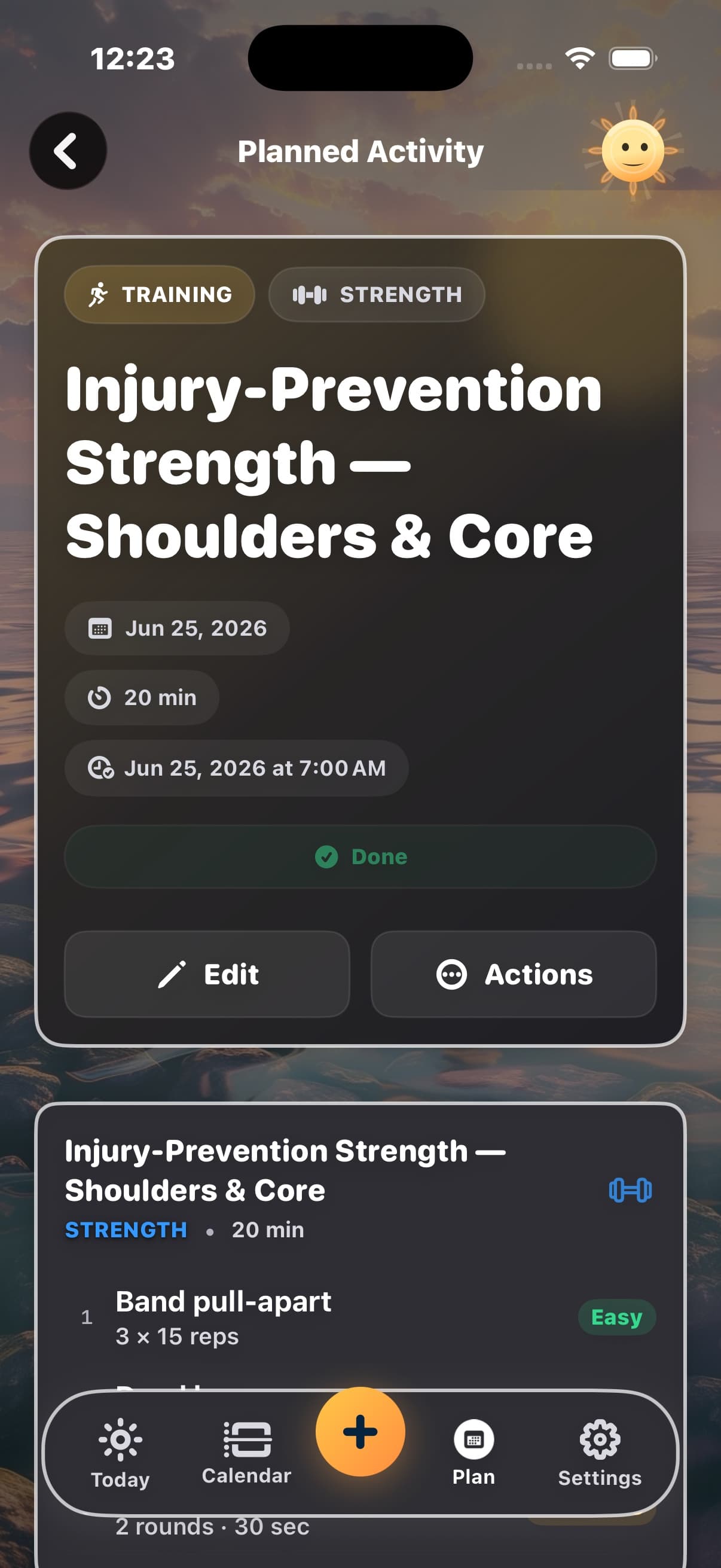
Keeps its real Apple Health type, name, and icon, including wheelchair racing, swimming, and strength work.
Instead of
0 steps treated as an inactive day
Diorama
Uses pushes, wheelchair distance, active minutes, or duration when those metrics apply.
Instead of
“Low effort” because heart rate stayed low
Diorama
Uses other measures when heart rate is not a useful guide, after you explain what matters.
Instead of
Mobility work judged against a pace goal
Diorama
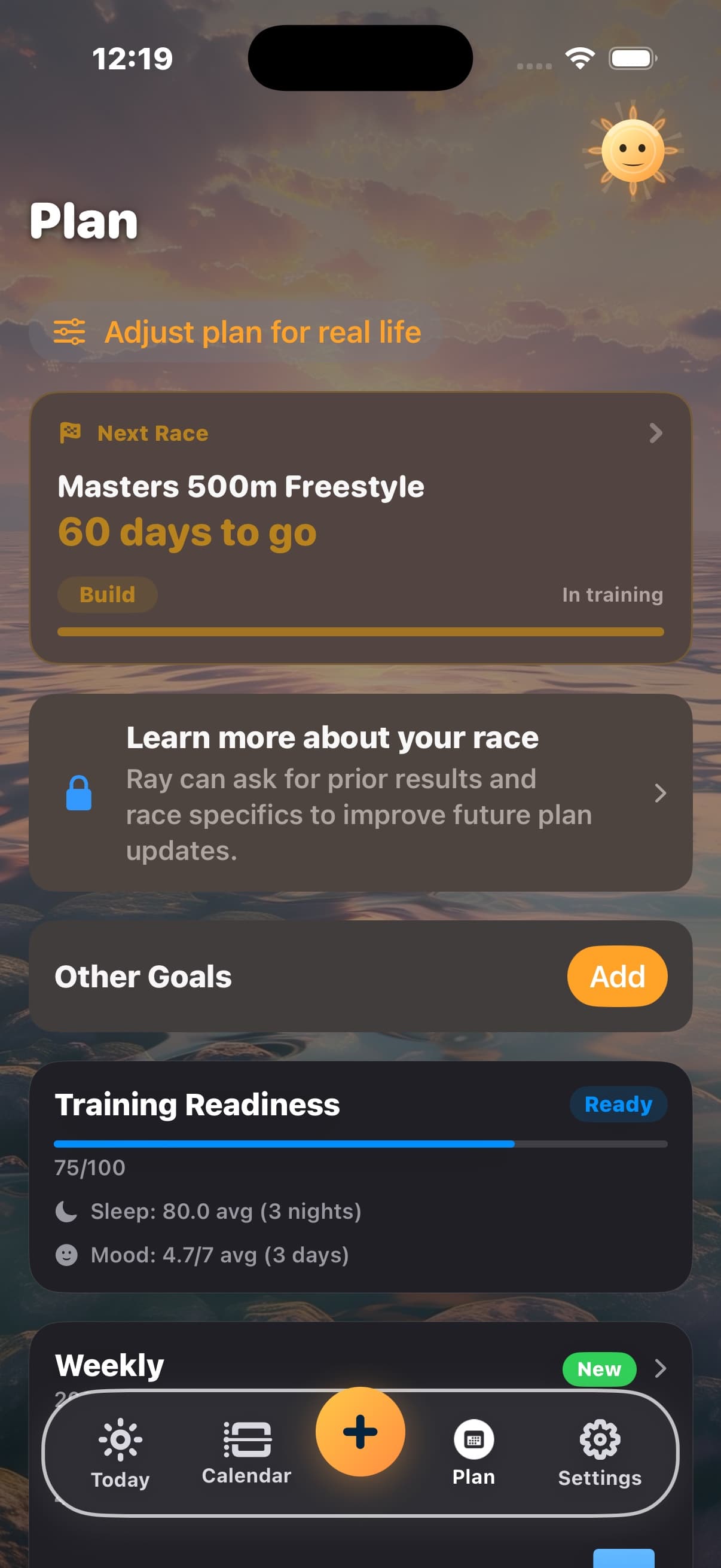
Keeps your goal in view, whether you are training to compete, supporting daily life and mobility, or rebuilding strength.
Instead of
A coach that forgets last week
Diorama
Remembers the details you choose across coaching requests, so you do not have to repeat them.
Instead of
Sensitive context becoming an ad profile
Diorama
Stores profile facts locally and keeps their content out of routine behavioral analytics.
Goals · readiness · strength
Who it is for
Four examples, from competitive para sport to everyday mobility. Each starts with a different goal and a different definition of progress.
Wheelchair racer
Training to compete
Intervals, pushes, and recovery can guide coaching without a step count standing in for training load.
Older adult building strength and mobility
Moving on their terms
Short walks, sit-to-stands, balance work, and seated strength can be tracked against the goals that matter to them.
Para swimmer
Training by effort
Pool sessions and recovery stay central, with coaching shaped by the athlete’s own context and goals.
Returning to strength work
Building a routine
Seated strength and the sessions that fit this week count without assuming distance racing is the goal.
Private by design
Profile facts are typed and stored on your device. Relevant context can accompany a Ray request when you use AI, while sensitive profile content stays out of routine behavioral analytics.
Questions
Diorama is for anyone whose movement, health, or goals are poorly served by the default fitness-app mold. Wheelchair racers, para swimmers, other disabled athletes, older adults, beginners, and people training around injuries or changing schedules can all give it the details that matter, while serious endurance athletes can use it for structured race training. There’s no separate mode to enable.
No. Diorama starts with sensible defaults and learns from normal conversation, only when you choose to tell it something.
Diorama uses the facts you provide. Saying that you are a wheelchair racer can change language and movement metrics, but it does not imply anything about transfers, floor work, or other capabilities. You choose what to share, one context at a time.
Profile facts are stored on your device. When you use Ray, relevant context accompanies that AI request so the answer can fit you. Profile-fact content and health values are not sent to routine behavioral analytics.
Diorama uses the facts you provide. Saying that you are a wheelchair racer can change language and movement metrics, but it does not imply anything about transfers, floor work, or other capabilities. You can add those details separately when they matter. The current feature supports tracking and coaching context. Generated workouts do not yet account for every stated detail automatically. Profile facts live on your device and are excluded from routine behavioral analytics.
Start with sensible defaults, then add details only when they matter.